
War Eternal-Divine Battlefield
ONEMTStrategy
4.12.83K Reviews
- Version
- 10.0.189
- Installs
- 5.00M
- Age Rating
- Mature 17+
Screenshots
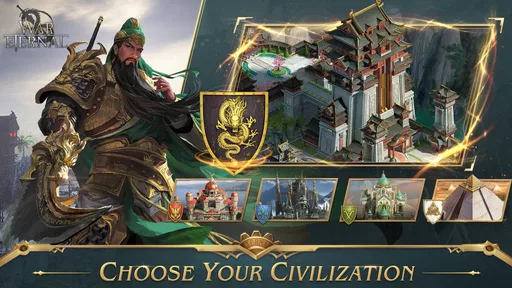
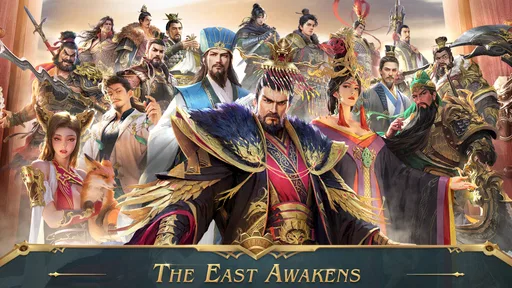

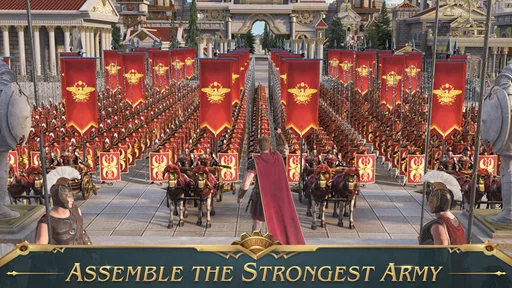
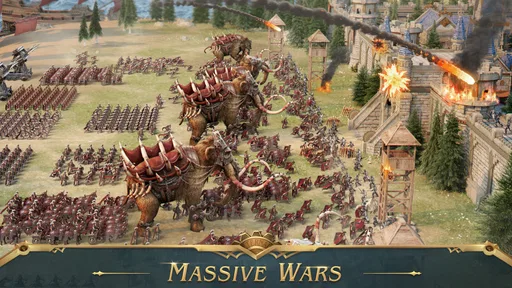
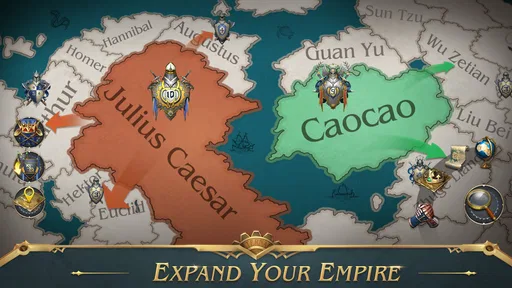
Our Review of War Eternal-Divine Battlefield
 Analysis by Appyee
I approached War Eternal-Divine Battlefield as a decision rather than a quick download: is this the kind of strategy game that deserves a regular place on your phone, or is its war-focused style likely to become another app you open once and forget? After spending time with it, my answer is fairly clear. It is aimed at players who enjoy building an empire, making long-term military choices, and watching a world develop through repeated sessions. It is much less suitable for anyone looking for a short, self-contained puzzle or a purely casual game with no pressure to return.
Developed by ONEMT, this free strategy game has a mature tone and a large existing audience, with over five million installs and an average score of 4.1 from around one hundred eight thousand ratings. Those figures tell me that it has reached well beyond a small niche, but they do not remove the need to understand its rhythm. The important question is not simply whether it is popular. It is whether you like the kind of commitment that an empire-building war game asks from you.
What to consider before choosing War Eternal
The first decision criterion is patience. This is not the sort of strategy experience where every action produces an immediate, dramatic result. The appeal comes from arranging priorities, improving your position, and deciding which opportunities are worth pursuing. I found that the game makes more sense when I treated each session as one step in a continuing campaign rather than expecting a complete victory in a few minutes.
The second criterion is your preferred type of strategy. Some players want direct control over every unit and enjoy fast tactical battles. Others prefer a broader view, where the satisfying part is deciding how to develop a realm and how to respond to threats. War Eternal belongs more naturally to the second group. Its central fantasy is not simply “win this fight”; it is the ongoing responsibility of managing a civilization in a hostile setting.
The mature rating also matters. The war setting, conflict-driven presentation, and overall tone make this a poor choice for younger players or for anyone who wants a gentle fantasy game. Adults who are comfortable with a serious battlefield atmosphere will understand the presentation more easily. I would still recommend checking the age suitability for the person using the device, especially if the phone is shared with family.
Another practical question is whether you are comfortable with optional spending. The game is free to start, but its in-app purchases range from less than a dollar to almost one hundred dollars for an item. That range is significant. Even if you intend to play without paying, knowing that purchase options exist changes how I evaluate progression. I pay closer attention to whether I am making a smart decision or simply reacting to a prompt designed to make waiting feel inconvenient.
My advice is to begin with a personal rule: do not buy anything during the first several sessions. Use that time to learn the basic loop, see whether the setting holds your attention, and decide whether you enjoy the planning itself. This is more useful than judging the game from its opening moments, when many strategy titles are still introducing systems and handing out early rewards.
The empire-building loop rewards planning
What kept me interested was the sense that small choices can shape the next stage of play. A resource decision can affect what I am able to improve later. A military priority can leave another part of the empire less prepared. That relationship between present convenience and future strength is where the strategy feels most meaningful.
I found it helpful to avoid spending every available resource immediately. Keeping a reserve gives you room to respond when a new objective appears or when your priorities change. This is one of the less obvious habits that improves the experience: instead of treating every reward as permission to upgrade something at once, I considered whether saving it would create more flexibility.
The same principle applies to development choices. When several improvements compete for attention, I prefer to choose a clear direction for the next few sessions rather than spreading effort across everything. A focused plan makes progress easier to understand. It also reveals whether the game’s strategic layer suits you, because the satisfaction comes from connecting several decisions rather than tapping through isolated upgrades.
Another useful approach is to play in short planning sessions and reserve longer sessions for moments when you actually have time to make decisions. Opening the game repeatedly without a purpose can turn the experience into routine maintenance. I enjoyed it more when I entered with a question in mind: what should I strengthen, what can wait, and which risk is worth taking?
Why the battlefield theme works for some players
The war setting gives the larger management loop a reason to exist. Expansion, defense, and preparation feel connected to the world rather than being abstract menus. I like that the theme encourages me to think in terms of consequences. A choice is not only about gaining something; it may also expose a weakness or limit what I can do next.
This is where the game can beat a lighter city-building alternative for me. A peaceful builder may be better when I want to decorate, optimize production, or relax without opposition. War Eternal creates more tension because the setting constantly frames development as preparation. Even when I am not in the middle of a battle, the military context gives my decisions more urgency.
That urgency can also become tiring. If you prefer a calm game where progress is entirely personal, the battlefield framing may feel like unnecessary pressure. I would not recommend choosing this title purely because you like building games. The conflict element is central to its identity, and players who dislike competition or war themes may find the strategic layer less enjoyable than expected.
Everyday use: fitting the game into a normal routine
A realistic use case is a player who has a few minutes during a commute, a lunch break, or while waiting for an appointment, followed by a longer session in the evening. In that routine, I would use brief visits to review the state of the empire and decide what deserves attention, then return later when I can think through more involved choices. The game works better for that kind of repeated engagement than for a single uninterrupted marathon.
There is a trade-off, though. A game built around continuing progress can make it tempting to check the phone more often than intended. My solution was to decide in advance when I would play and what I wanted to accomplish. That simple boundary kept the game from becoming background noise and made each return feel more purposeful.
For someone who travels or has an unpredictable schedule, this structure may be appealing because a session does not need to be a full evening. For someone who wants a game that can be finished in one sitting, it is the wrong fit. The value is in returning to a developing empire, not in reaching a quick ending.
Where this game stands against other strategy choices
Compared with fast tactical strategy games, War Eternal asks me to think at a wider scale. I am less interested in perfecting a single encounter and more concerned with whether my overall position is improving. Players who enjoy immediate controls, rapid matches, and clear end points may prefer a tactical alternative instead.
Compared with traditional turn-based strategy, the experience feels more like an ongoing commitment than a sequence of neatly separated campaigns. Turn-based games are often easier to pause mentally because each scenario has a defined beginning and end. Here, the continuing empire can be more absorbing, but it also requires more willingness to maintain a long-term plan.
Compared with peaceful city builders, this game offers stronger conflict-driven motivation. The advantage is that development has a strategic purpose beyond appearance or efficiency. The disadvantage is that players seeking a purely relaxing construction game may feel that the military atmosphere gets in the way.
I would also separate it from short mobile puzzle games. Those titles are better when I want a complete challenge in a few minutes with no ongoing obligation. War Eternal is better when I want a persistent world that remembers my choices and gives me a reason to return. Neither style is automatically superior; they serve different moods and different amounts of available attention.
One decision many players will face is whether to move from a familiar strategy game. The cost of switching is not only downloading another title. You also have to learn its pacing, understand its priorities, and accept that early progress may feel slower while you build confidence. I would switch if the current game no longer gives you meaningful decisions, especially if you want a stronger sense of empire-wide planning. I would stay with the familiar option if you mainly value quick matches, simple rules, or a campaign that ends cleanly.
To make the transition easier, I would avoid trying to recreate your old play style immediately. Spend the opening period learning what War Eternal considers important. Keep notes mentally about which decisions seem to affect future options, and resist judging the game only by how quickly it rewards you. The most useful comparison is not which game gives more gifts at the beginning, but which one makes you think more often in a way you actually enjoy.
Progression, purchases, and sensible spending
The free entry point is a real advantage. You can test the central experience without committing money first, which is exactly what I want from a mobile strategy game with a mature audience and a long-term structure. The purchase range, however, means that spending can become a meaningful part of the decision for some players.
I recommend separating convenience from necessity. If a purchase merely saves time, ask whether the waiting period is genuinely spoiling your enjoyment or whether it is part of the game’s intended rhythm. If the answer is the latter, keeping your money and continuing normally is the healthier choice. I also prefer setting a firm personal budget before opening any purchase screen, rather than deciding in the heat of frustration.
Players who dislike any form of optional spending should approach carefully, even though the download itself is free. The presence of purchases does not automatically make the game unsuitable, but it does mean that self-control is part of the experience. If you know that delayed progress will push you toward impulse buying, a paid game with a fixed price may be a better alternative.
On the other hand, players who see optional purchases as a way to support a game they already enjoy may find the model acceptable. My recommendation is still to earn your opinion first. A game should prove that its planning and world-building are enjoyable before you decide whether convenience is worth paying for.
Technical expectations and device fit
The game supports Android devices running version 5.0 or later, and the current version is 10.0.189. That broad operating-system requirement makes it accessible to many Android users, although the experience can still vary depending on the age and performance of the device. I would keep reasonable free storage available and close unnecessary apps if the phone is older, particularly before a longer session.
I would also remember that a strategy game with a continuing world is not ideal for every phone setup. If your device is shared, your play time may be interrupted. If you regularly change phones, make sure you understand how your progress is handled before treating the game as a long-term hobby. I am not saying this to create unnecessary concern; it is simply part of choosing a persistent mobile game instead of a self-contained one.
The mature age classification should be considered alongside the device itself. A family tablet used by children may not be the right place for this title, even if the hardware can run it. For an adult’s personal phone, the rating is a straightforward signal about the intended audience and tone.
Who should play it, and who should skip it
I would recommend War Eternal to adults who enjoy strategic planning, persistent progression, and a civilization shaped by conflict. It is especially appealing if you like checking a developing empire, making choices with delayed consequences, and comparing several possible priorities before committing to one.
I would also recommend it to players moving away from very simple builders who want more tension in their decisions. The battlefield setting gives ordinary development choices a clearer purpose, and the long-term structure can make progress feel more personal than a series of disconnected levels.
I would skip it if you want a game that is completely relaxed, instantly understandable, or finished within a short sitting. I would also look elsewhere if your favorite part of strategy is direct tactical control over small groups rather than managing a broader civilization. A turn-based campaign may suit you better if you want clearly defined scenarios, while a peaceful builder may be preferable if conflict is not enjoyable.
The game is also not my first recommendation for someone who is highly sensitive to monetization prompts or who finds ongoing progression stressful. Even a well-designed strategy loop can feel like work when you are constantly worried about falling behind. In that situation, a fixed-price or offline-focused alternative usually provides a cleaner experience.
My final recommendation
After weighing the alternatives, I see War Eternal as a solid choice for a specific kind of mobile strategy player rather than a universal recommendation. Its strongest quality is the combination of empire development and battlefield purpose. I like having to think beyond the next action and consider how today’s decision affects the position I will have later.
Its main friction is the commitment. The game asks for repeated attention, and the free-to-play structure means I need to manage my expectations and spending habits. Those are not minor details; they determine whether the experience feels like an engaging long-term hobby or a chore that keeps asking for another check-in.
My practical advice is to install it only if you are willing to give the planning loop a fair trial. Play without purchasing at first, keep your early goals focused, and judge the game after you have experienced its ongoing rhythm rather than its first few minutes. If you enjoy returning to an empire and making deliberate choices under a war-focused theme, it is worth keeping. If you want quick, self-contained entertainment, choose a different category instead.
For me, the recommendation is positive but selective: choose it for long-term strategic decision-making, not for instant action. The developer has built a game with enough scale to attract a substantial audience, and the 4.1 average from roughly one hundred eight thousand ratings suggests that many players find value in that approach. I would simply make sure its persistent, mature, purchase-supported structure matches the way you actually want to play before making it part of your daily routine.
Verdict
Strengths of War Eternal-Divine Battlefield
- Multiple factions and heroes create varied team-building options.
- Frequent events give active players extra objectives and rewards.
- Alliance features make cooperation and coordinated attacks more engaging.
- The fantasy artwork and character designs are visually appealing.
- Auto-battle helps reduce grinding during routine encounters.
Limitations of War Eternal-Divine Battlefield
- Progress can feel slow without regular daily play and resource management.
- Competitive rankings may favor players who spend heavily on upgrades.
- The many currencies and menus can be confusing for new players.
- Combat becomes repetitive once familiar formations dominate the meta.
- Some features require waiting timers or premium items to access quickly.
Other Releases by ONEMT
View All
Rise of the Kings
Strategy4.3
Similar Picks in This Category
View All
Clash of Clans
Supercell4.5

Plants vs. Zombies™
ELECTRONIC ARTS3.7

Lords Mobile: Kingdom Wars
IGG.COM4.5

Clash Royale
Supercell4.4

State.io — Conquer the World
CASUAL AZUR GAMES4.1

Car Driving School : Car Games
Spark Game Studios3.9
Frequently Asked Questions
What is War Eternal-Divine Battlefield?
War Eternal-Divine Battlefield is a mobile strategy game focused on kingdom building, resource management, alliances, and large-scale battles. Players develop their territory, train different types of troops, research upgrades, recruit commanders, and compete against other players. The game combines city development with real-time or scheduled multiplayer warfare, so progress depends on both planning and cooperation.
Can War Eternal-Divine Battlefield be played offline?
No, War Eternal-Divine Battlefield is primarily an online game. A stable internet connection is required to load your account, synchronize progress, participate in events, communicate with alliance members, and fight other players. Offline access is generally not suitable for this type of strategy experience, and connection interruptions during important activities may prevent actions from being completed correctly.
Is War Eternal-Divine Battlefield free to download and play?
The game can generally be downloaded and started for free, allowing players to build a kingdom and experience its main systems without paying upfront. However, it may include optional in-app purchases for premium currency, resource packs, development boosts, or special items. Spending money is not always necessary, but paying players may progress faster or gain additional convenience.
Does the game support multiplayer or alliances?
Yes, multiplayer cooperation is an important part of War Eternal-Divine Battlefield. Players can usually join or create alliances, communicate with teammates, contribute to shared objectives, reinforce allies, and participate in group battles or territory events. Joining an active alliance is highly recommended because coordinated players can access more rewards and receive strategic support during conflicts.
What should new players know before starting?
New players should expect a long-term strategy experience rather than a quick action game. Early decisions involving construction, research, troop training, commanders, and resource spending can affect later progress, so completing tutorials and beginner missions is useful. It is also wise to protect resources, follow event schedules, and avoid upgrading everything randomly before understanding the game’s priorities.
Play our best games!


